
Forging
Deputy Rusty
Have you ever had an idea stick with you,
begging to be realized?
For me, this was the case with a character I call Deputy Rusty. A few years ago, I conceived this character as part of a homebrew Dungeons and Dragons Campaign set in a steampunk, fantasy Wild west. Even though I only ended up DM’ing one session, this character, and the world that came with him, stuck with me, and I found myself returning to him constantly in my doodles and sketches. Eventually, I just decided to bring him to life through 3D modeling.
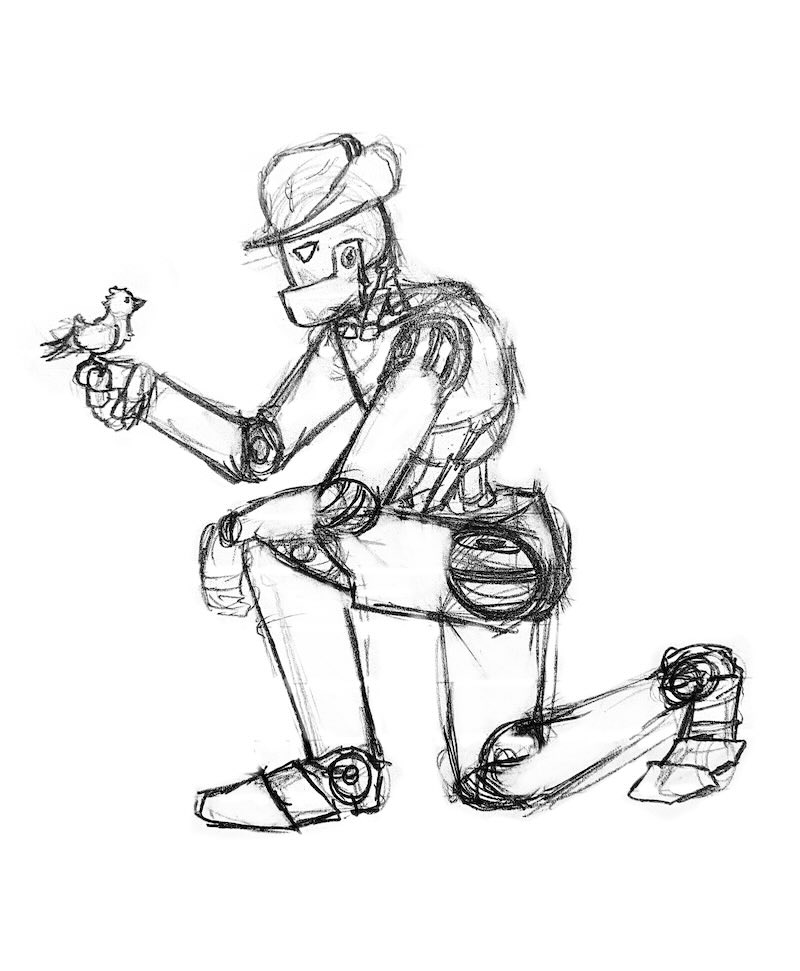
This was my first sketch of Deputy Rusty. From the beginning, the fundamental trait of a robot wearing a cowboy hat was established. Some character traits were also cemented here, such as Rusty being kind and gentle, as seen by him gingerly holding a bird.
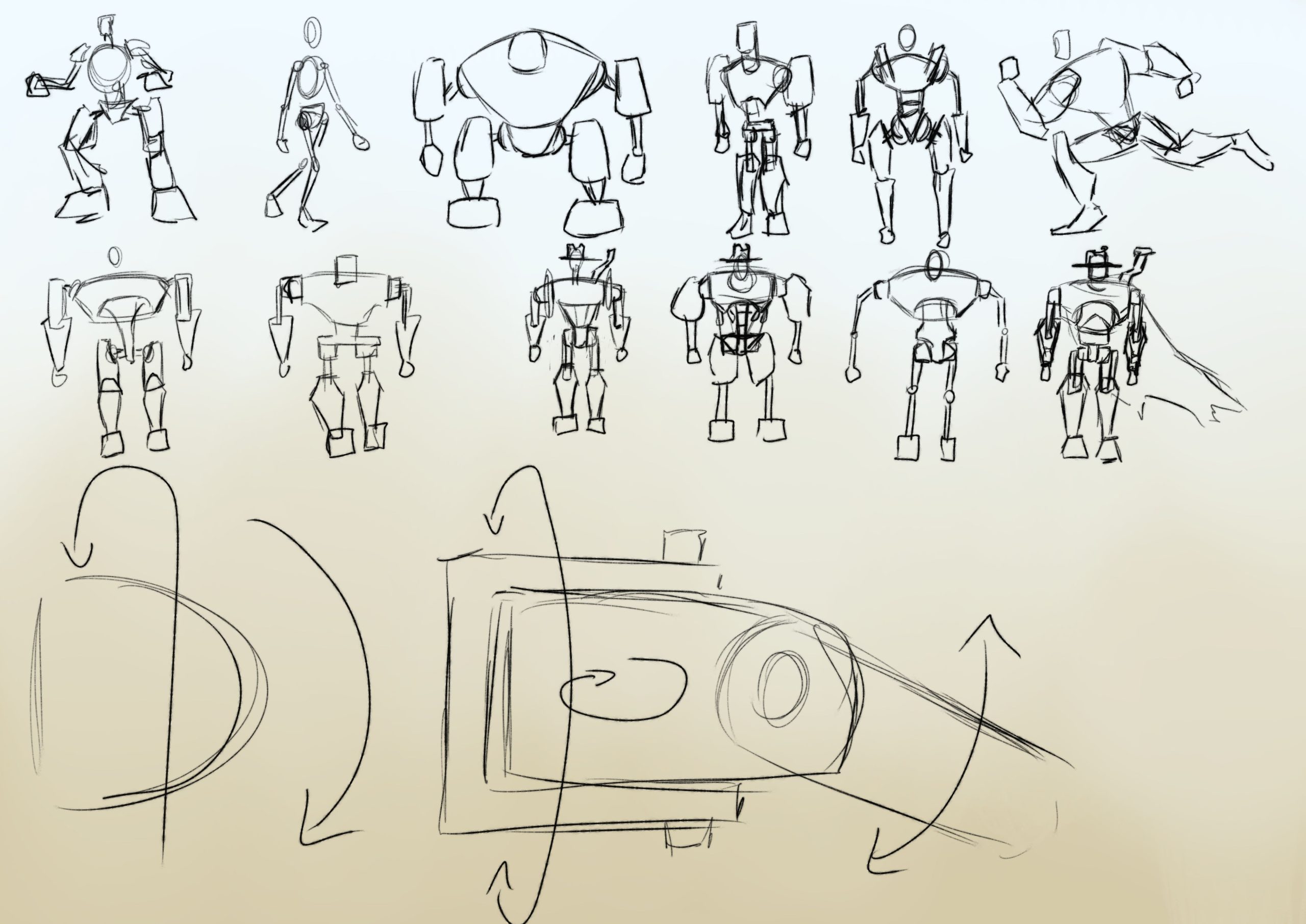
My first sketches tried to nail down whether Deputy Rusty would be bulky or skinny. Through this process, I gained another point of inspiration.
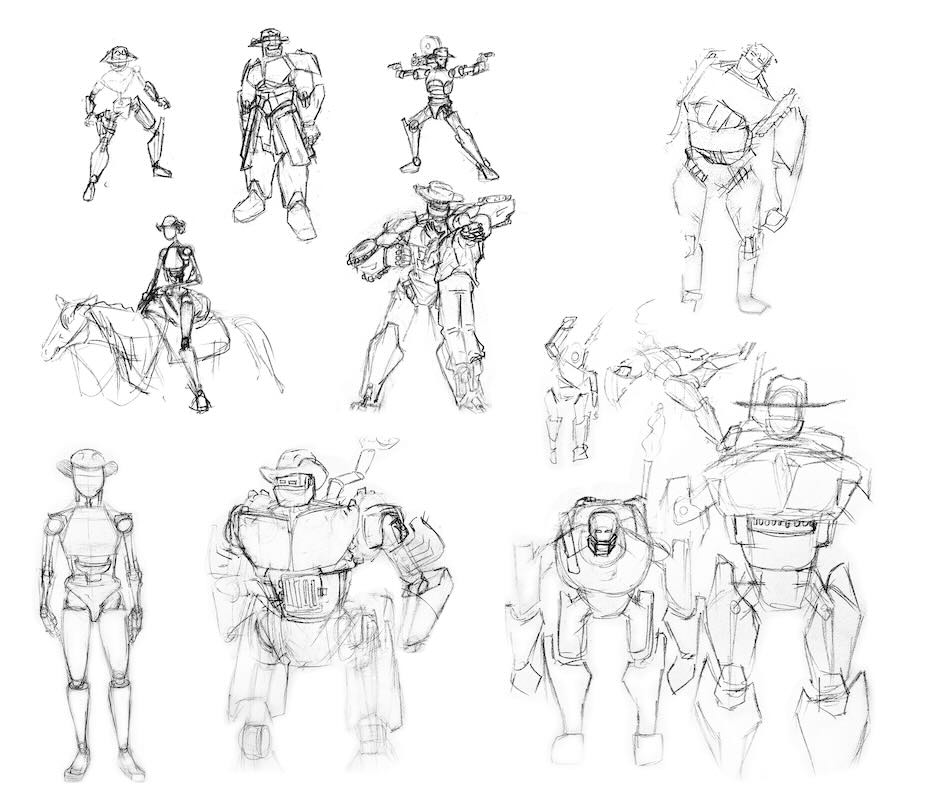
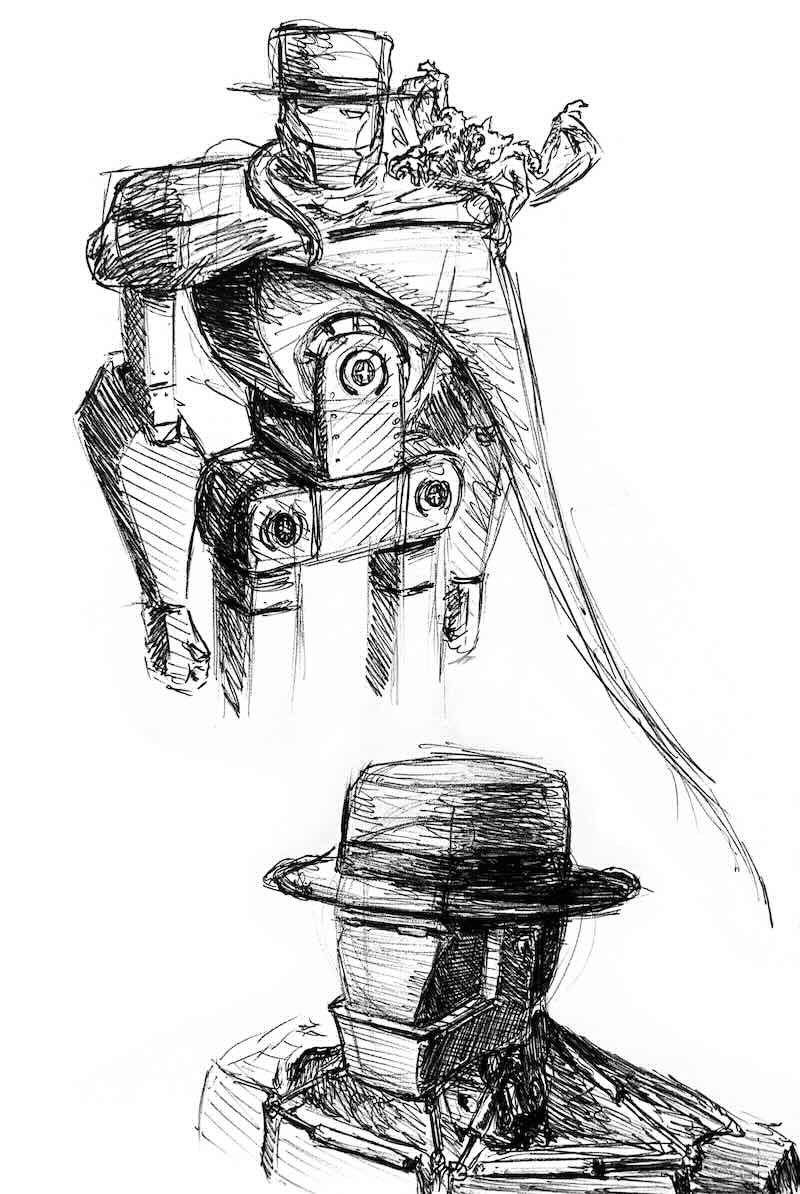
Growing up, I was obsessed with legos, especially Bionicles. With my favorite childhood toy as an inspiration, my final sketch ended up being a design that was very block, but not too bulky.
All these iterations led to this piece of concept art. At this stage, the core elements of Deputy Rusty were locked in, but I would still go on to refine specific elements of the design.
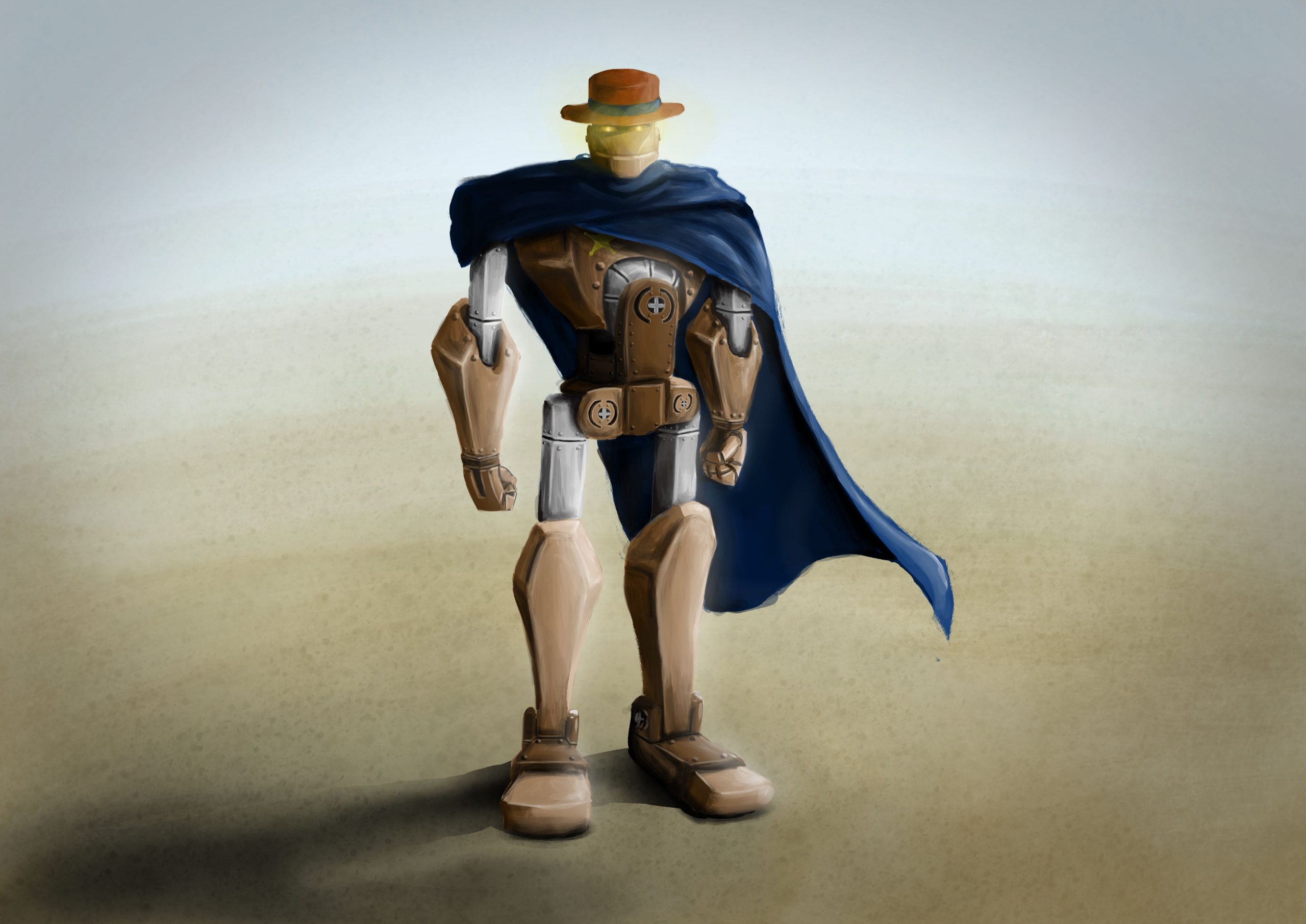
Flexible Designs
It was important to me that the way Deputy Rusty moved was believable. Even though I was not designing a very complex robot, I wanted to maintain a solid range of motion, while having the articulations feel as if I was posing a lego action figure.
In this animation test I wanted to see how the parts interacted in motion. The way I designed the joints meant that no joint rotated on more than one axis, so areas of complex movement such as the wrist were broken up into multiple cascading joints.
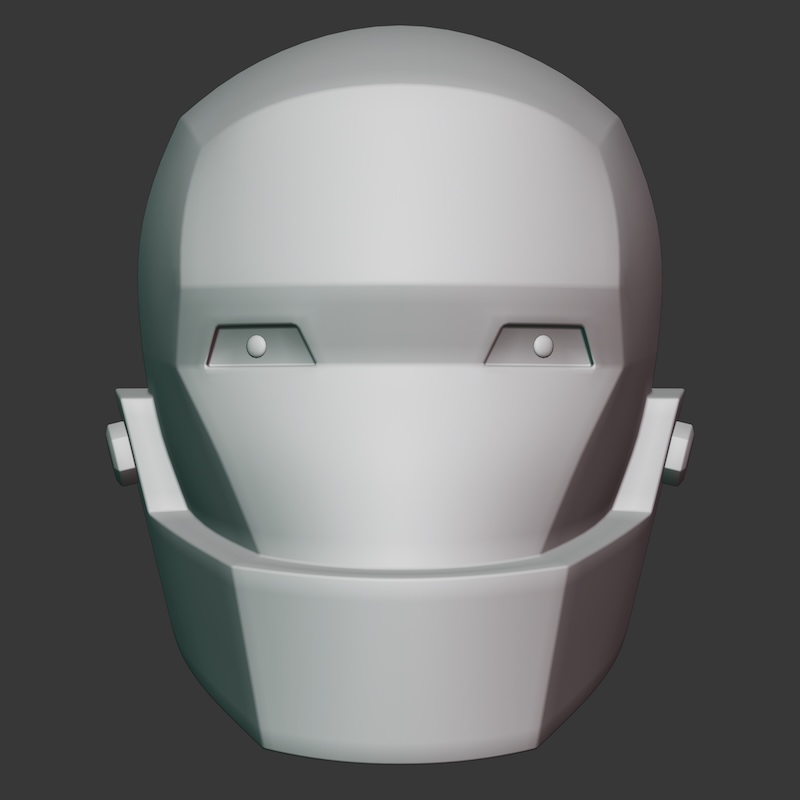
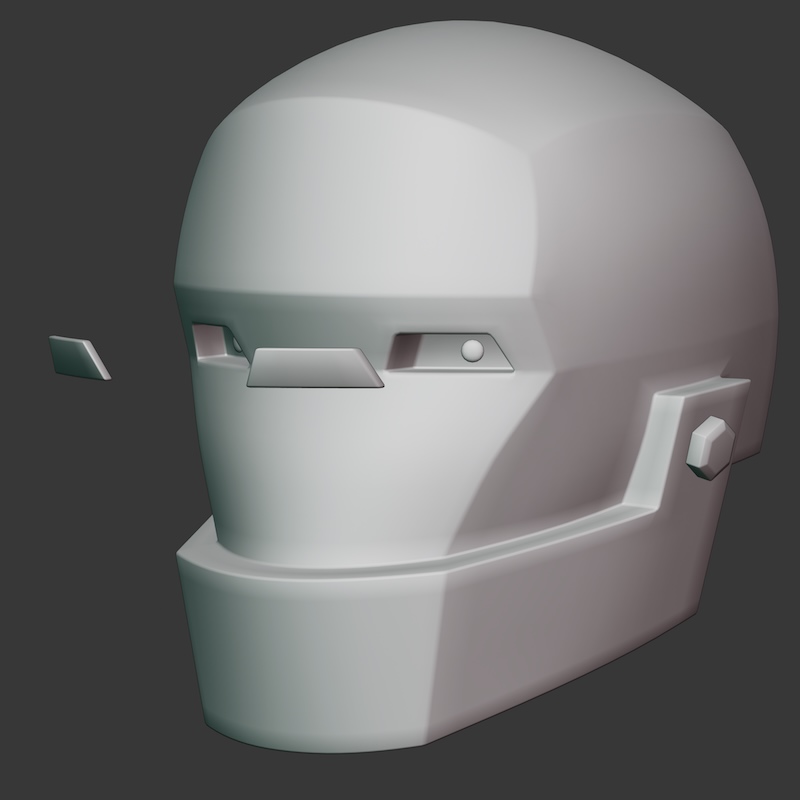
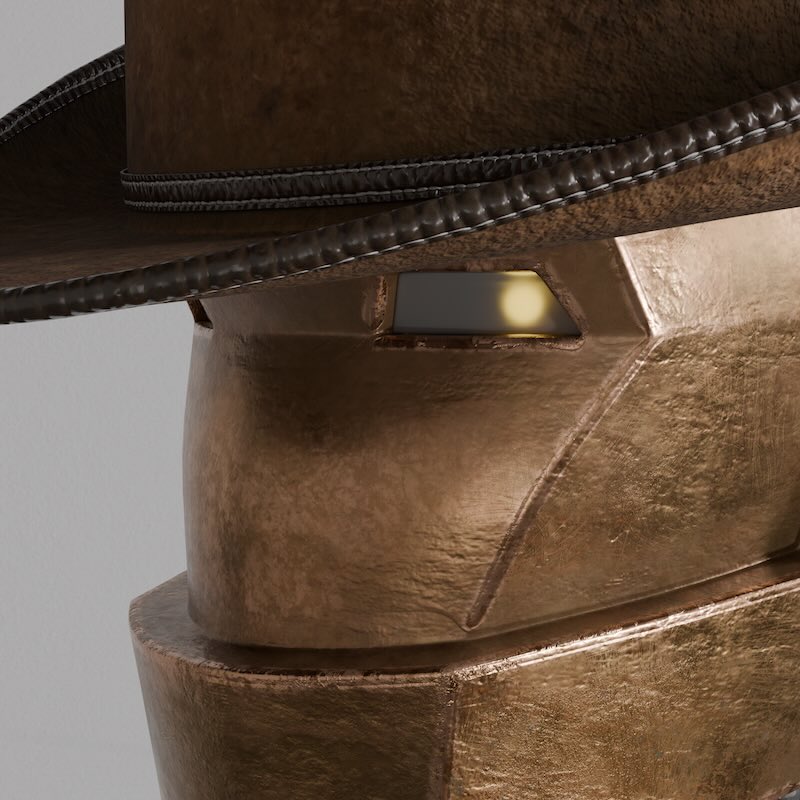
Part of the concept of Deputy Rusty was that the there was no points of articulation in his face, meaning that from a character standpoint, it is hard for him to express himself. However, I didn’t want him to appear soulless, so I needed some form of expression in the eyes. While I had been pretty adamant about creating believable points of articulation, I wasn’t quite sure how to accomplish this with the eyes.
Robotic Repetition
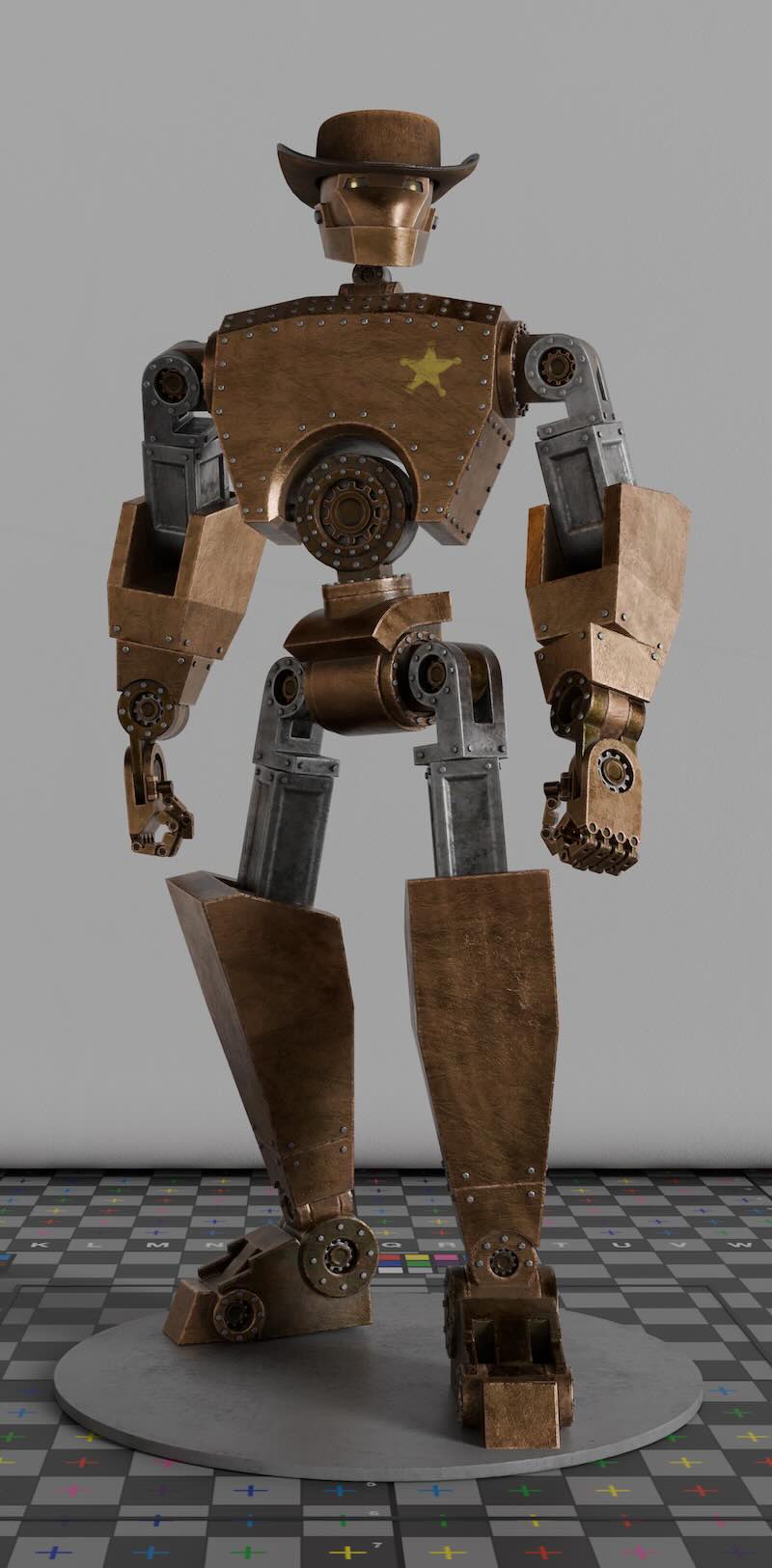
Continuing on with the modeling process, some visual motifs started to emerge. By reusing parts and connections I had modeled earlier, I was not only able to increase the efficiency with which I modeled, but also create a more cohesive character design.
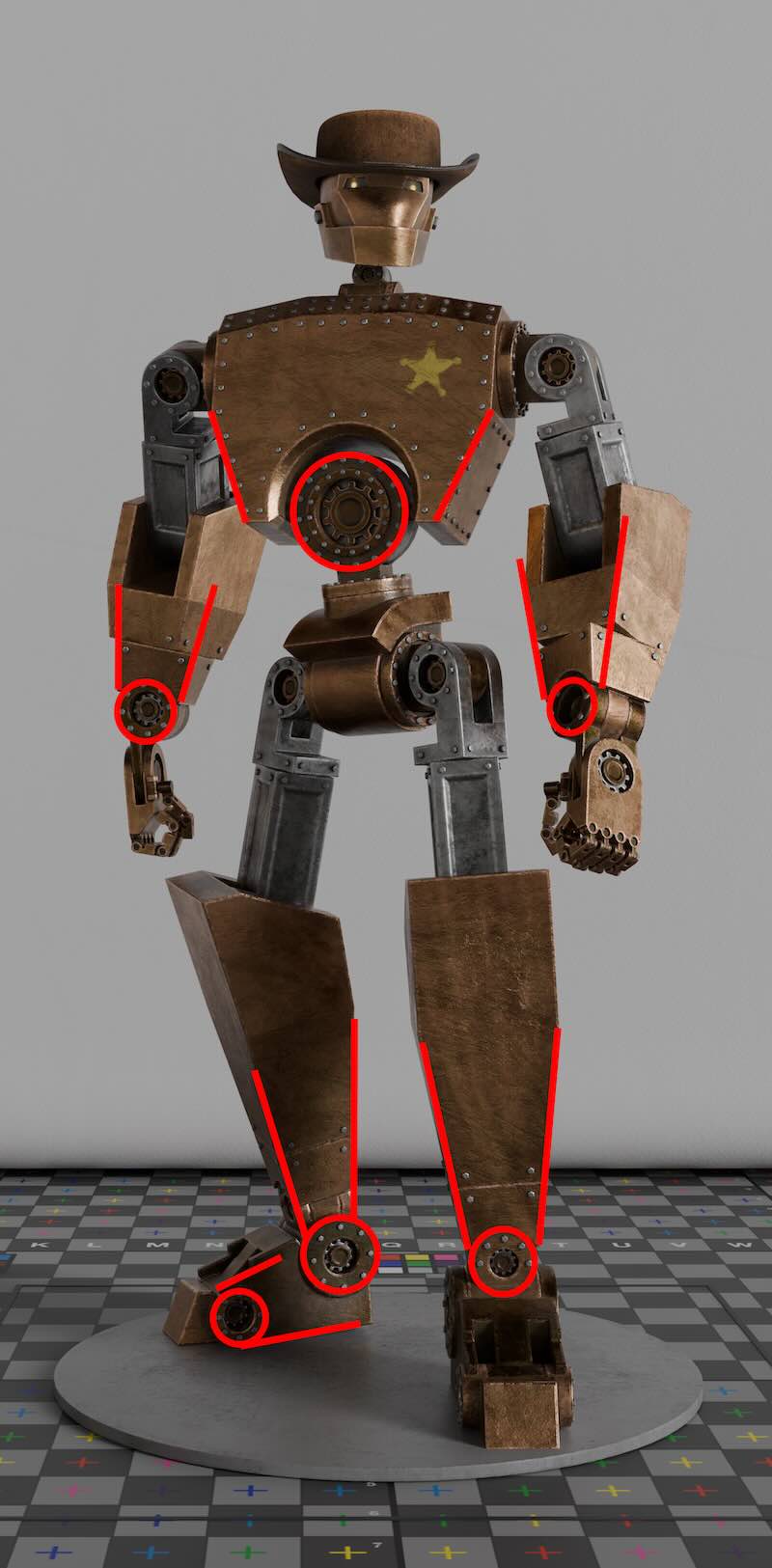
One of the biggest motifs in the design language of Deputy Rusty was the transition from circular connection points to quadrilaterals, primarily rectangles and trapezoids.
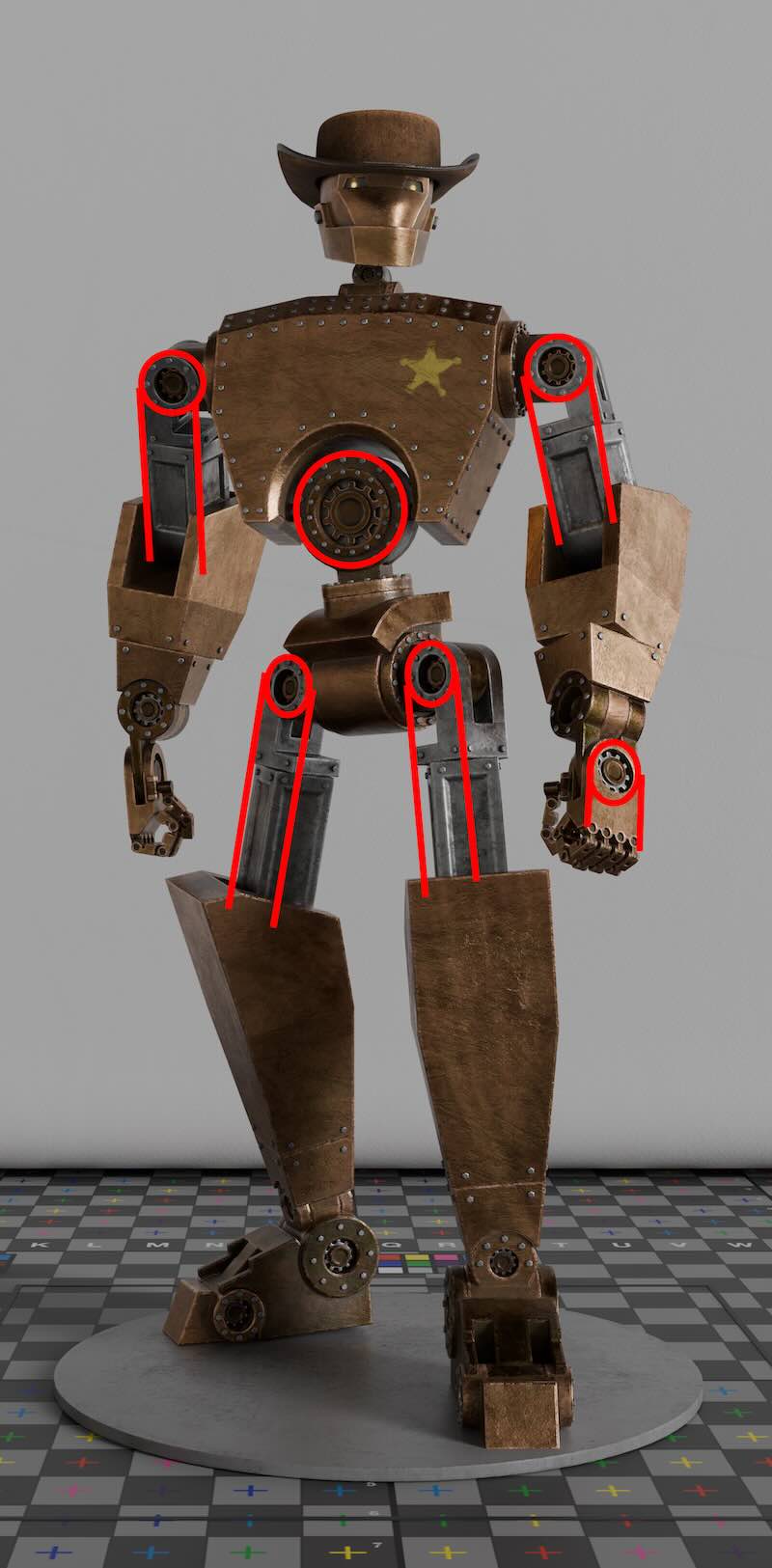
Circular connection points moving down the body chain generally transition into rectangular shapes.
On the other hand, circular connections moving up the body chain generally connect to more trapezoidal shapes.
Standing Tall
Finally, the character that I had imagined years ago had come to life. The final details really allowed me to explore just who Deputy Rusty was. Despite his name, his metallic body is well taken care of. He is someone who takes care of people, and in return those people take care of him.
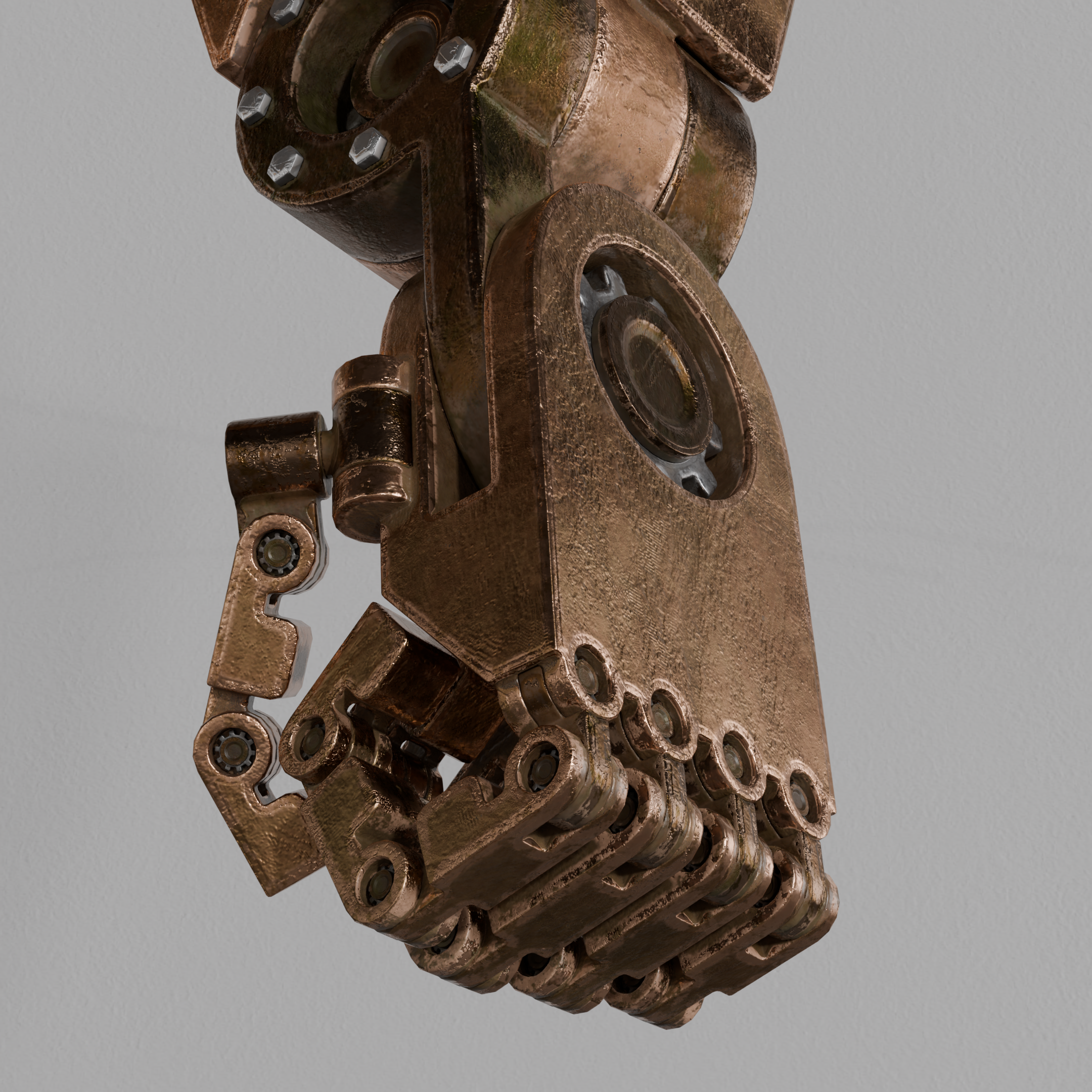
Living in the harsh conditions of the old west has caused some wear and tear to his metal body, but largely he is undamaged and uncorroded.
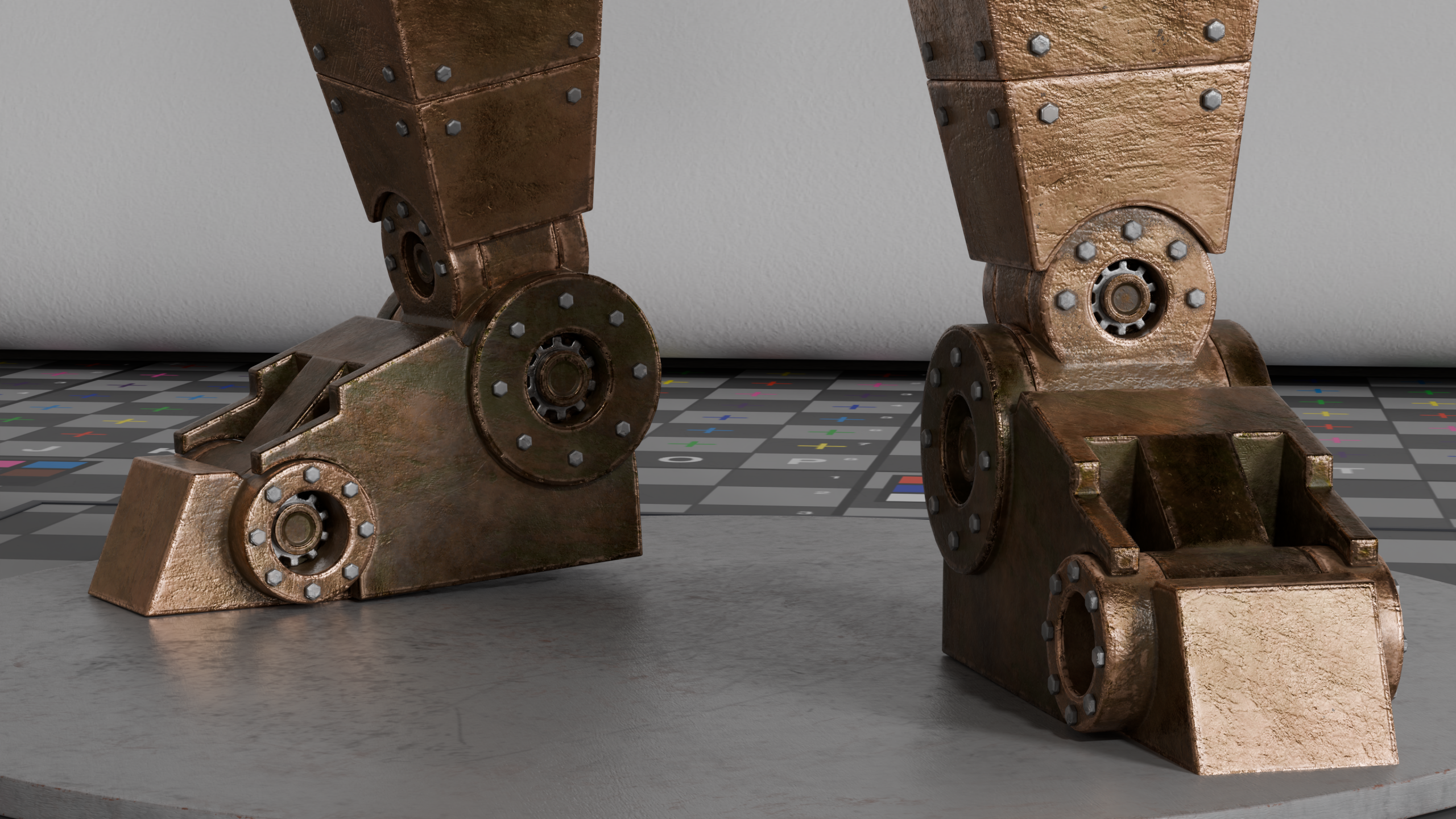
Being largely undamaged means to me that he can and has taken a few hits and walked them off. This toughness and this ability to be an impenetrable wall is what earned him the title of Deputy.
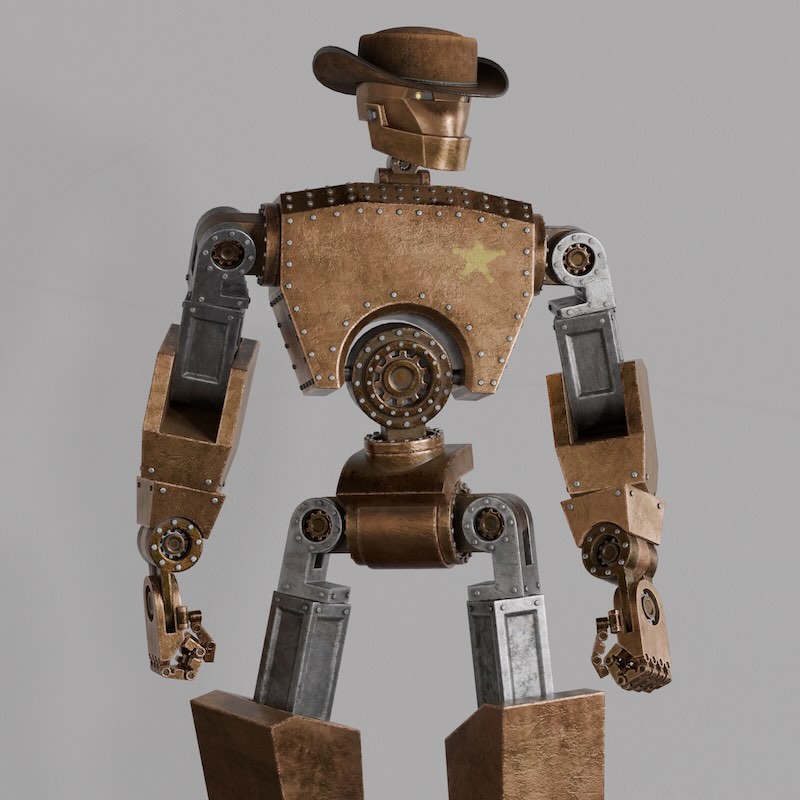
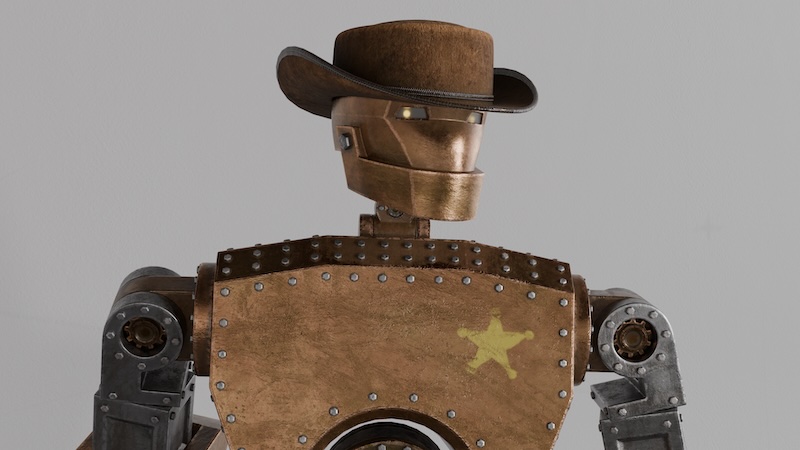
The hand-painted star on his chest and his cowboy hat were both gifts from grateful townsfolk. In my mind, this relationship of trust is what gives Deputy Rusty a sense of character.
The Breath of Life
Creating Deputy Rusty has been one of the most challenging yet rewarding personal projects that I have undertaken in a long time. Throughout this process I pushed myself to bring this character from the fantasy world in my head to the real world. Because of the attention to detail I put in each joint, and the storytelling I injected into the model and textures, Deputy Rusty feels alive.
Ben Ames
3D Generalist and Compositing Artist
Do you need high quality 3D characters? Ben Ames is a professional 3D generalist and compositing artist with five years of experience. For all of your 3D and VFX needs, reach out by emailing ben@am3sdigital.com